
Self Publishing with Amazon Kindle Direct Publishing: Print Books in Paperback and Hardcover
Learn how to self publish print books using Amazon Kindle Direct Publishing. Discover how KDP prints paperback and hardcover books on demand and ships them to readers worldwide.
What Is Amazon Kindle Direct Publishing (KDP)?
Amazon Kindle Direct Publishing is a self-publishing platform that allows authors to publish and sell books directly on Amazon.
With KDP, authors can publish:
- eBooks for Kindle devices
- Paperback books
- Hardcover books
The platform gives authors full control over pricing, distribution, and royalties while Amazon handles production and delivery.
Amazon KDP has revolutionized the publishing industry by allowing authors to publish books without traditional publishers. Writers can publish paperback and hardcover print books, and Amazon handles the printing, storage, and global shipping.
This print-on-demand system allows self-published authors to reach millions of readers worldwide without managing inventory or upfront printing costs.
Publishing Print Books with KDP
KDP allows authors to publish print books in two popular formats.
Paperback Books
Paperback books are the most commonly published format for self-published authors.
Features include:
- Affordable printing costs
- Flexible trim sizes
- Black and white or color printing
- Global distribution through Amazon marketplaces
Because paperback books are inexpensive to produce, they are often used for novels, workbooks, journals, and nonfiction books.
Hardcover Books
KDP also allows authors to publish premium hardcover books.
Hardcover options include:
- Durable case-laminate covers
- Black and white or color interior printing
- High-quality presentation
Hardcovers are ideal for:
- Special edition books
- Photo books
- Educational textbooks
- Gift books
How KDP Print on Demand Works
One of the biggest advantages of Amazon KDP is print-on-demand technology.
Instead of printing thousands of copies in advance, books are printed only when a customer places an order.
The process works like this:
- Author uploads book manuscript and cover design
- The book becomes available for sale on Amazon
- A customer orders the book
- Amazon prints the book on demand
- Amazon ships the book directly to the customer
This eliminates the need for inventory storage or upfront printing costs.
Benefits of Publishing Print Books with KDP
Self-publishing with Amazon KDP offers several advantages for authors.
No Upfront Printing Costs
Authors do not need to invest money in large print runs. Books are printed only when sold.
Global Distribution
Books are available on Amazon marketplaces worldwide, reaching millions of potential readers.
Full Author Control
Authors control pricing, updates, and book details at any time.
Higher Royalties
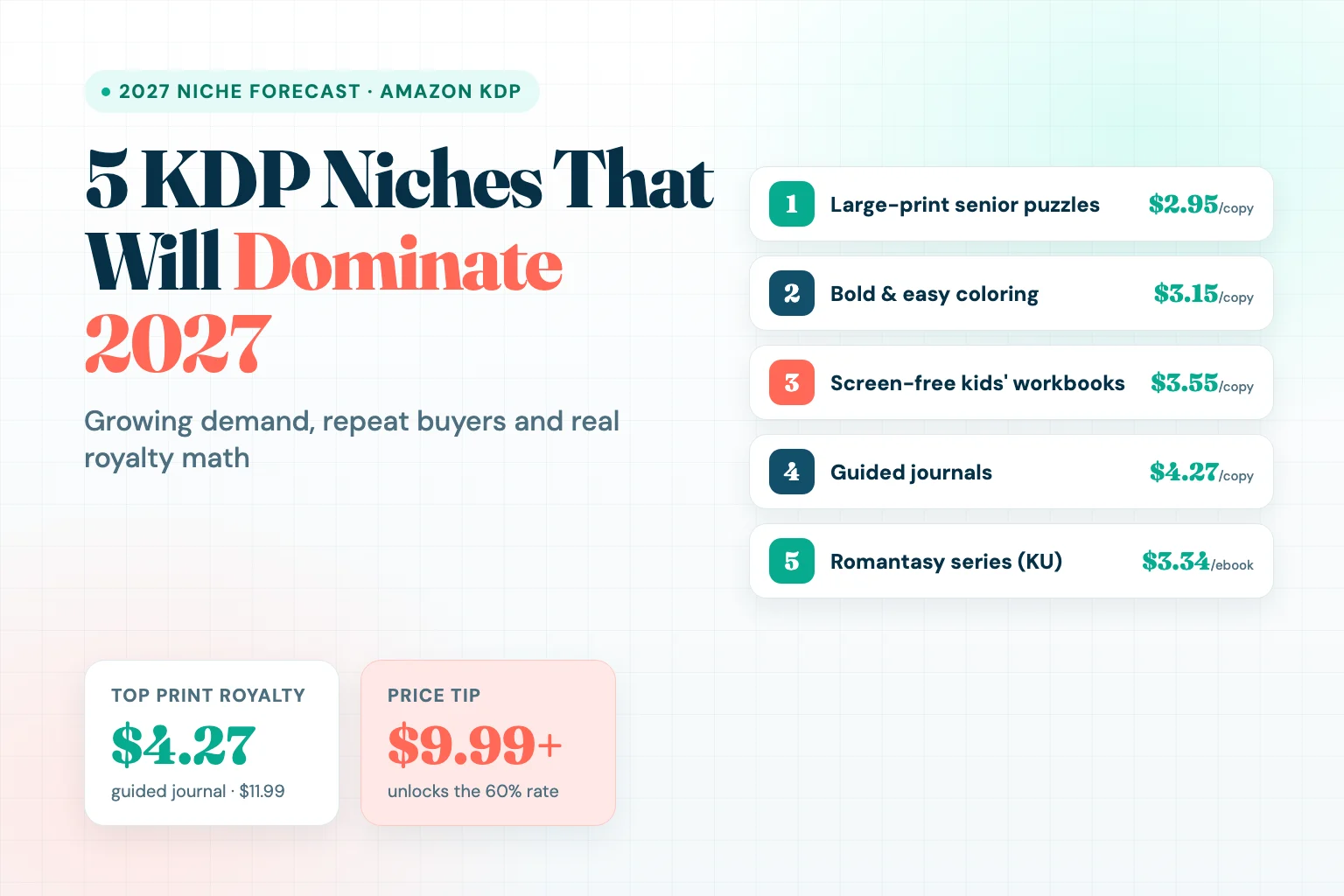
Authors can earn up to 60% royalties on print books, depending on pricing and printing costs.
Want to calculate your exact print book royalties? Use our KDP Royalty Calculator to see your earnings for paperback and hardcover books.
Steps to Publish a Print Book on Amazon KDP
Publishing a print book with KDP involves a few simple steps.
Step 1: Prepare Your Manuscript
Format your book according to Amazon's publishing guidelines. Ensure proper margins, fonts, and page sizes.
Step 2: Create a Professional Cover
Your cover should match the trim size and page count. Use Amazon's cover calculator or our KDP Cover Calculator tool.
Step 3: Upload to KDP
Upload your manuscript and cover through the KDP dashboard.
Step 4: Set Pricing and Distribution
Choose your book price and marketplaces. Use our Royalty Calculator to find the optimal price point.
Step 5: Publish Your Book
After approval, your book becomes available on Amazon within 24–72 hours.
Print Book Options Available on KDP
KDP offers a variety of printing options for authors.
| Feature | Options |
|---|---|
| Trim Sizes | Multiple sizes from 5×8 to 8.5×11 |
| Cover Finish | Matte or glossy |
| Interior Color | Black and white or premium color |
| Paper Type | Cream or white |
| Binding | Paperback or hardcover |
These options allow authors to customize their books for different genres and audiences.
Who Should Use Amazon KDP for Print Books?
Amazon KDP is ideal for:
- New authors publishing their first book
- Independent writers building a publishing business
- Coaches and entrepreneurs publishing educational books
- Bloggers turning content into books
- Businesses publishing branded books
Tips for Successful Print Book Publishing
To succeed with print books on Amazon KDP, authors should focus on quality and marketing.
Key tips include:
- Invest in professional cover design
- Format the manuscript correctly
- Choose competitive pricing
- Optimize book descriptions and keywords
- Promote the book through marketing channels
Why Amazon KDP Is the Future of Self Publishing
Self-publishing platforms like KDP have removed traditional publishing barriers.
Authors no longer need agents, publishers, or large investments to publish books. With print-on-demand technology, global distribution, and full creative control, Amazon Kindle Direct Publishing has become one of the most powerful tools for independent authors.
Frequently Asked Questions
Does Amazon KDP print books only when they sell?
Yes. KDP uses print-on-demand technology, so books are printed only when customers place orders. There is no need for inventory or bulk printing.
Can I publish both paperback and hardcover versions?
Yes. Authors can publish both formats through the same KDP platform for the same book.
Do I need to pay to publish a book on KDP?
No. Publishing on Amazon Kindle Direct Publishing is completely free. Amazon earns money through printing costs deducted from your royalties.
How much do authors earn from print books?
Authors typically earn up to 60% royalty on print books minus printing costs. Use our Royalty Calculator to see your exact earnings.
👉 Calculate your real Amazon KDP royalties here — our free calculator shows ebook, paperback & hardcover earnings instantly.
Topics
Ready to Run the Numbers?
Put this knowledge into action. Calculate your potential royalties before you publish.